We’ve officially hit the midpoint of the year. While you might be focusing on planning summer vacations or enjoying the seasonal weather, smart St. Louis real estate investors are taking a hard look at their bank accounts to see if their properties are actually performing as projected.
Executing a comprehensive mid-year property management checklist ensures your investments stay on track before the year slips away. Many landlords wait until tax season in January to analyze their finances. By then, it’s too late to fix cash drag, high vacancy costs, or vendor overcharging that quietly ate away at your profits over the prior twelve months.
By conducting a thorough St. Louis rental portfolio audit—reviewing actual cash flow, evaluating upcoming lease renewals, and checking current market-rate comps—you can make key adjustments today to salvage and maximize your 2026 ROI.
- 1. The Cash Flow vs. Reality Audit: Tracking True Performance
- 2. Summer Rent-Comps & Implementing a Smart Lease Renewal Strategy
- 3. Mid-Year Property Management Checklist – Property Walkthroughs: The Preventative Maintenance Audit
- 4. The Value of Streamlining Your Portfolio Real-Time
- 5. The Avenue Residential Advantage
- Take Action for a Profitable Second Half of 2026
1. The Cash Flow vs. Reality Audit: Tracking True Performance
It’s time to compare your pro-forma (expected) numbers with your actual bank statements from the first six months of the year. Many investors look at gross rental income and assume everything is fine, but true profitability is found in the microscopic details of your operating expenses. If you want to master rental cash flow optimization in STL, you have to bridge the gap between expectations and reality.

Analyze the Leaking Money
Look closely at your maintenance line item. Did a single plumbing issue wipe out three months of cash flow? Unexpected maintenance is part of landlording, but recurring issues point to systemic problems. If you see the same repair popping up repeatedly, it’s time to transition from temporary fixes to a permanent solution.
By calculating your exact Net Operating Income (NOI)—which is simply your gross rental income minus your operational expenses—for the first half of the year, you can see if you are on track to hit your targeted cash-on-cash return. If your returns are lagging, look closely at your vendors. Are you overpaying for basic turns or standard HVAC calls?
Track Vacancy Costs
Calculate exactly how many days your units sat empty this year. Many owners fail to realize that every week of vacancy costs roughly 2% of your annual rental income. If a unit took six weeks to rent this past spring, that’s an immediate 12% hit to that property’s gross potential income for the year. This mid-year mark is the perfect moment to learn how to calculate rental property ROI St. Louis using real-time vacancy numbers rather than idealized projections. To better understand the long-term impacts of these financial shifts on property assets, you can review the latest macroeconomic real estate data compiled by the Federal Reserve Bank of St. Louis (FRED).

Assess Expense Ratios
Are utility bills or insurance premiums higher than you budgeted in January? With the St. Louis Metropolitan Sewer District (MSD) and local water rates continually shifting, utility costs in South City, Tower Grove, or University City multi-family properties can easily spike.
A mid-year review helps you catch these hikes early. If you notice utility bills climbing drastically, you may need to look into implementing a Ratio Utility Billing System (RUBS) or check the property for hidden underground water leaks.
Budget for Capital Expenditures (CapEx)
Take note of the age of your big-ticket items—roofs, HVAC systems, and water heaters. If your cash flow was strong for the first six months, it’s wise to allocate a portion of those profits into a dedicated capital expenditures (CapEx) reserve account. This prevents an autumn furnace failure from putting your entire portfolio in the red.
2. Summer Rent-Comps & Implementing a Smart Lease Renewal Strategy
June and July mark the absolute peak of the St. Louis leasing season. The weather is favorable, families want to settle in before the school year starts for local districts, and moving demand is high. If you have leases ending soon, this is your best window to adjust rents to true market rates.
During this high-demand summer window, properties generally command premium rents and find tenants quickly. Conversely, the winter leasing window from November through February brings low demand and a much higher risk of extended vacancies.

Run Fresh St. Louis Neighborhood Rent Comps 2026
Don’t rely on last year’s data or outdated Zillow estimates. Run new neighborhood comps to see what similar units are renting for right now. The rental landscape in neighborhoods like Central West End, Soulard, and the Loop changes rapidly. A market-rate valuation completed in the winter will not accurately reflect what tenants are willing to pay during the competitive summer surge.
| St. Louis Submarket | 2025 Average Rent | Current 2026 Market Rate | Estimated Peak Demand |
| South City (Tower Grove/Shaw) | $1,350 | $1,425 | High |
| University City | $1,600 | $1,700 | Very High |
| Central West End | $2,100 | $2,250 | High |
| St. Louis County (Kirkwood/Webster) | $1,850 | $1,950 | Very High |
The Renewal Sweet Spot
When offering renewals, your goal shouldn’t necessarily be squeezing every last dollar out of a resident. Instead, deploy a balanced lease renewal strategy. Aim for a minor increase that keeps a great tenant in place but still inches you closer to current market rates (typically a 3% to 5% bump).
Landlord Tip: A tenant vacancy almost always costs more than a modest rent increase saves. Calculate the cost of fresh paint, carpet cleaning, marketing, and days on market before forcing a quality resident out over a $50 monthly difference.

Strategically Align Lease End Dates
Are you stuck dealing with lease expirations during Thanksgiving, Christmas, or New Year’s? It is incredibly difficult to rent a property in Missouri during the winter months. If you have leases scheduled to expire in November or December, use the mid-year mark to fix it.
While adjusting rental rates mid-lease Missouri landlords must follow strict contract laws—meaning you cannot unilaterally alter a signed lease agreement mid-term—you can negotiate strategically during the renewal conversation.
Offer your tenant a 14-month or 18-month renewal option instead of the traditional 12-month term. This intentionally pushes the next expiration date back into the high-demand spring and summer window, permanently optimizing your portfolio’s timeline.
3. Mid-Year Property Management Checklist – Property Walkthroughs: The Preventative Maintenance Audit
You shouldn’t wait for a tenant to move out to see what the interior of your asset looks like. A quick, respectful mid-year evaluation can save thousands of dollars in long-term structural degradation.
Execute a Mid-Year Landlord Tenant Inspection Checklist
Before stepping foot on the property, make sure you follow state regulations by downloading and reviewing the official Missouri Attorney General Landlord-Tenant Law Guide. Providing proper written notice (typically 24 to 48 hours) before entry is required by law. Once inside, keep your eyes peeled for specific red flags:
- Lease Violations: Look for signs of unapproved pets (food bowls, scratched doors) or evidence of smoking inside the property.
- Safety Hazards: Ensure smoke detectors and carbon monoxide alarms have fresh batteries and are functioning correctly. Check that fire extinguishers are charged.
- Structural Risks: Look for signs of structural shifting or cracks in foundation walls, particularly in historic brick homes common throughout South St. Louis.
The Secret Water Leak Check
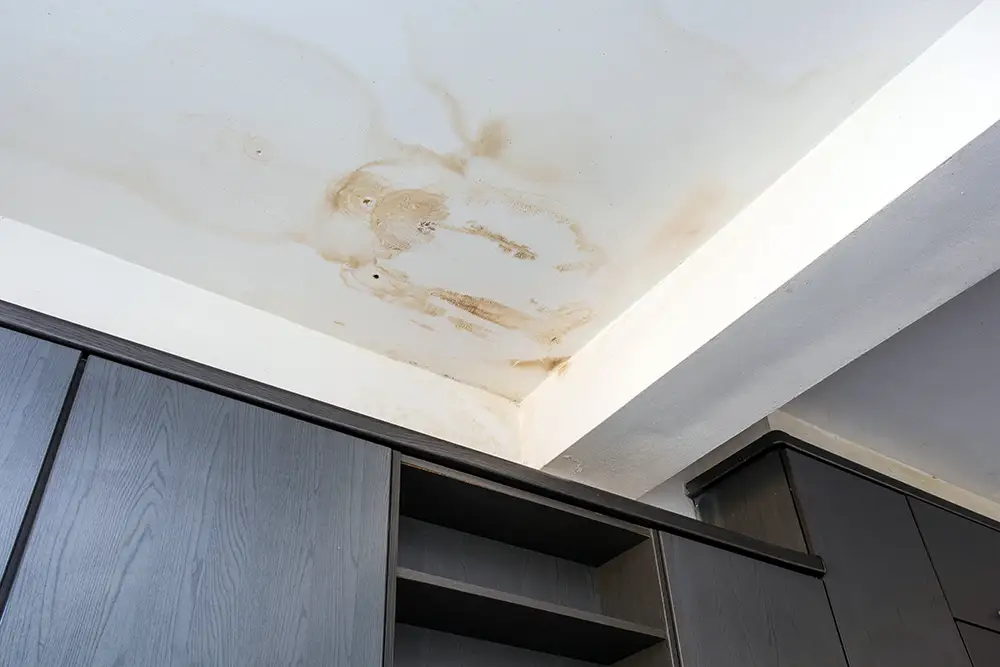
Water damage is the biggest threat to a landlord’s bottom line. During your walkthrough, perform a targeted inspection under kitchen and bathroom sinks.
Look for slow, silent drips that rot cabinetry, ruin subfloors, and breed toxic mold. Turn on the showers and check the caulking around tubs. Re-sealing a bathtub costs $15 in materials; replacing a rotted subfloor and joist system due to a slow leak can easily top $4,000.
HVAC Filter and Condenser Inspections
Verify that tenants are actually replacing their HVAC filters. A clogged, dust-caked filter restricts airflow, forcing the system to work twice as hard. When airflow is blocked, it leads directly to frozen coils and eventual compressor failure, which can trigger an expensive system replacement right in the middle of a heatwave.
Checking this now protects your furnace and compressor from catastrophic failure during the upcoming late-summer heatwaves. Additionally, clear out any weeds, brush, or debris crowding the exterior A/C condenser unit to maintain optimal efficiency.
4. The Value of Streamlining Your Portfolio Real-Time
Managing a growing real estate portfolio requires a multi-faceted approach. To make this process easier for independent landlords, we’ve compiled our standard operating procedures into a scannable mid-year property management checklist you can use to audit your properties this week:

Mid-year Property Management Checklist – Financial Performance
- [ ] Compare actual gross income against your original January pro-forma projections.
- [ ] Total up all maintenance costs from Q1 and Q2 to pinpoint financial leaks.
- [ ] Calculate your true year-to-date cash-on-cash return.
- [ ] Audit utility bills for unexpected spikes (check for regional rate increases).
- [ ] Set aside a designated percentage of revenue into a CapEx reserve fund.
Mid-year Property Management Checklist – Leasing & Market Positioning
- [ ] Pull fresh 2026 rental comps for each property zip code.
- [ ] Identify all leases expiring within the next 90 to 120 days.
- [ ] Draft lease renewal offers with targeted 3-5% market-rate adjustments.
- [ ] Review winter-expiring leases and draft extension offers to shift them to summer.
- [ ] Update marketing photography if any upcoming vacancies require listing.
Mid-year Property Management Checklist – Physical Property Inspection
- [ ] Send formal 24-hour notices of entry to tenants for mid-year walkthroughs.
- [ ] Check under all sinks, vanities, and water heaters for active or slow leaks.
- [ ] Inspect HVAC filters and replace them if the tenant has neglected maintenance.
- [ ] Test all smoke and carbon monoxide detectors; replace batteries as needed.
- [ ] Inspect exterior gutters, downspouts, and grading to ensure water moves away from the foundation.
5. The Avenue Residential Advantage
Diving into deep financial spreadsheets, running highly accurate market comps, and coordinating physical property inspections takes dozens of hours of meticulous work—hours that busy real estate investors simply do not have to spare. It’s easy to let these vital administrative and preventative tasks fall through the cracks when life gets hectic.
That is where partnering with a professional team makes all the difference. At Avenue Residential Leasing & Management, we provide our property owners with comprehensive asset management that goes far beyond simply collecting rent checks.

Real-Time Financial Visibility
Through our intuitive online owner portal, you gain immediate, transparent access to your financial performance indicators. You can view real-time cash flow statements, track precise operating expenses, and monitor maintenance costs instantly. You’ll never have to guess about your profitability or wait until tax season to see how your portfolio is performing.
Systematic Portfolio Optimization
We handle the entire mid-year property evaluation process on your behalf. Our dedicated team takes care of scheduling, tenant notifications, and comprehensive on-site walkthroughs to catch structural and maintenance issues before they turn into costly capital expenditures.
Furthermore, we keep a constant pulse on shifting St. Louis market dynamics. We actively track regional micro-trends to ensure your properties command top-tier pricing.
Our team systematically structures and adjusts your lease expiration calendars, strategically shifting renewals into peak demand seasons to insulate your investments against extended, costly vacancies. We also work diligently to protect your property by ensuring complete compliance with the Missouri Fair Housing Act guidelines, shielding you from costly legal missteps. For broader guidance on maintaining fair housing standards nationwide, landlords can also consult the official U.S. Department of Housing and Urban Development (HUD) portal.
We don’t just act as a rent collection service—we serve as proactive partners dedicated to protecting, maintaining, and maximizing your real estate assets so you can enjoy true passive income without the operational stress.
Take Action for a Profitable Second Half of 2026

A rental portfolio is a business, and successful businesses do not wait until December to look at their books or assess the health of their assets. Taking the time in June to execute a rigorous mid-year property management checklist guarantees a stronger, more stable, and significantly more profitable second half of the year.
By analyzing financial leaks, adjusting upcoming lease terms to align with summer demand, and catching minor maintenance issues early, you protect both your short-term cash flow and your long-term property appreciation.
Are you unsure how your rental properties stack up against the rapidly evolving St. Louis market? Don’t leave your returns to guesswork. Contact our expert team at Avenue Residential Leasing & Management today.
Let us handle the heavy lifting for you. Contact us now to schedule a comprehensive, professional consultation to optimize your portfolio’s performance for the rest of 2026 and beyond!